Planning a Trip to Yellowstone? Here’s the Best Time to Go Based on Weather and Crowds
January 5, 2026
10 Best Wildlife Viewing Spots in Yellowstone Near the West Entrance
May 9, 2026
Yellowstone RV Park at Mack’s Inn — Travel Guide
Is Taking an RV to Yellowstone National Park a Good Idea?
The complete guide to RVing America’s most iconic national park — and why the right base camp makes all the difference.
You’ve dreamed about pulling up to Old Faithful, watching bison roam outside your windshield, and waking up surrounded by pine-scented mountain air. Taking an RV to Yellowstone National Park can make all of that possible — but it requires more planning than a typical road trip. The park is 3,472 square miles, campgrounds fill up fast, road restrictions catch many RVers off guard, and finding full hookups inside the park is nearly impossible.
The short answer? Yes, absolutely — an RV is one of the best ways to experience Yellowstone. The freedom, flexibility, and comfort it provides are unmatched. But the longer answer involves knowing the rules, choosing the right base camp, and planning far enough ahead. That’s exactly what this guide covers.
In This Guide
- The Pros & Cons of RVing to Yellowstone
- RV Size Limits & Road Restrictions
- Campgrounds Inside Yellowstone for RVs
- Best Season for Your Yellowstone RV Trip
- How Many Days Do You Need?
- Why Staying Outside the Park Is Smarter
- Yellowstone RV Park at Mack’s Inn: Your Perfect Base Camp
- Insider Tips for RVing Yellowstone
- Frequently Asked Questions
Key Takeaways
- RVing Yellowstone is absolutely worth it — the freedom and flexibility are unmatched — but advance planning is essential.
- Most park roads accommodate RVs up to 40 feet long and 102 inches wide. Maximum combined vehicle length on all roads is 75 feet.
- Fishing Bridge RV Park is the only campground inside Yellowstone with full hookups. All other in-park campgrounds have no hookups.
- Reserve in-park campgrounds up to 13 months in advance — summer sites sell out within hours of opening.
- Staying just outside the park — like at Yellowstone RV Park at Mack’s Inn, only 24 miles from the West Entrance — gives you full hookups, more space, and far less competition for reservations.
- Plan for at least 5–6 days, including a rest day near camp. The park is far larger than most people expect.
The Pros & Cons of Taking an RV to Yellowstone National Park
Before you hitch up and hit the road, it’s worth weighing the real-world advantages and challenges of RVing Yellowstone. Experienced RVers who’ve done it — some returning year after year — consistently say the experience is unlike anything else in the country. But it comes with logistics that require honest planning.
Reasons to Go by RV
- Travel on your own schedule — no shuttle, no tour bus
- Bring your own food, kitchen, and gear
- Sleep in your own bed every night
- Wake up early to catch wildlife before crowds arrive
- Pet-friendly travel (if staying at an outside park)
- Multi-park trips are easier (Grand Teton is close)
- Cost-effective for families and longer stays
- The sense of adventure is unparalleled
Challenges to Plan Around
- In-park campgrounds have strict size limits
- Full hookups inside the park: only one location
- Reservations required up to 13 months ahead
- Narrow park roads can be stressful in larger rigs
- No boondocking allowed inside park boundaries
- Wildlife jams cause long, unpredictable delays
- Summer crowds are intense — parking is limited for large rigs
- Some approach roads are not RV-friendly
The good news: virtually every one of those challenges can be planned around. And the rewards — watching a geyser erupt at dawn, spotting a grizzly in Lamar Valley, pulling into camp at sunset with the smell of pine in the air — are the kinds of memories that last a lifetime.
RV Size Limits & Road Restrictions in Yellowstone
This is the section most first-time RV visitors underestimate. Yellowstone’s road system was not built for today’s mega-rigs. Before you leave home, you need to know your RV’s exact length — and the combined length of your RV and any tow vehicle.
Maximum vehicle lengths by road and campground
| Location / Road | Max RV Length | Notes |
|---|---|---|
| All park roads (general) | 40 ft single / 75 ft combined | 102-inch width limit applies park-wide |
| Fishing Bridge RV Park (Upper Loop) | 40–95 ft | Only in-park full-hookup campground; newly renovated |
| Bridge Bay, Canyon, Grant, Madison | 40 ft | Pull-through and back-in; no hookups; dump stations nearby |
| Indian Creek | 30–35 ft | 35 ft at 10 sites; 30 ft at 35 sites |
| Lewis Lake | 25 ft | Smallest limit in the park; primitive, no hookups |
| Route 14 (east approach from Cody) | Not recommended | Steep grades; Route 14A is worse — avoid in large rigs |
| Beartooth Highway (Route 212) | Small rigs only | Scenic but extremely challenging for large RVs |
⚠ Critical Planning Note
When reserving in-park campgrounds, you must provide the combined length of your vehicle and tow vehicle with slide-outs fully extended. If your rig exceeds the campsite limit, park staff cannot accommodate you — even with a reservation.
Which entrance is best for RVs?
- West Entrance (West Yellowstone, MT): The most RV-friendly and most popular entrance. Straightforward approach, good roads. Recommended for most RVers.
- North Entrance (Gardiner, MT): Open year-round. Flat, easy approach. Only winter driving route through to Cooke City.
- South Entrance (Jackson, WY): Great if combining with Grand Teton National Park. Roads are fine for most RVs.
- East Entrance (Cody, WY): Route 16 is manageable, but Route 14 is steep and Route 14A is rated terrifying by experienced RVers.
- Northeast Entrance (Beartooth Highway): Spectacular scenery but not suitable for large rigs. Best for smaller Class B or C motorhomes only.
If you’re staying at Yellowstone RV Park at Mack’s Inn in Island Park, Idaho, you’re perfectly positioned for the West Entrance — a flat, 24-mile drive north on US-20 through the Targhee National Forest.
Campgrounds Inside Yellowstone That Welcome RVs
Yellowstone has 12 campgrounds with more than 2,000 sites total — but when you factor in size restrictions and hookup availability, finding the right fit for your RV takes research. Here’s what you need to know at a glance.
| Campground | Max RV Length | Full Hookups | Dump Station | Reservations |
|---|---|---|---|---|
| Fishing Bridge RV Park | 40–95 ft (Upper Loop) | ✓ Yes (only one in park) | ✓ Yes | Required — book early |
| Bridge Bay | 40 ft | ✗ No | ✓ Yes | Required |
| Canyon Village | 40 ft | ✗ No | ✓ Yes | Required |
| Grant Village | 40 ft | ✗ No | ✓ Yes | Required |
| Madison | 40 ft | ✗ No | ✓ Yes | Required |
| Mammoth | 30 ft (most sites) | ✗ No | ✗ No | First-come Oct–Apr |
| Indian Creek | 30–35 ft | ✗ No | ✗ No | First-come, first-served |
| Lewis Lake | 25 ft | ✗ No | ✗ No | First-come, first-served |
⚡ Reservation Reality Check
Summer reservations at in-park campgrounds open up to 13 months in advance — and sell out within hours. If you haven’t reserved by spring for a summer trip, you’re unlikely to find an in-park spot from late June through early September. This is one of the biggest reasons experienced Yellowstone RVers choose a full-hookup base camp just outside the park.
Best Season for Your Yellowstone RV Trip
Yellowstone behaves like four completely different parks depending on when you visit. Each season has a distinct personality — and some are far better than others for RVers.
Spring
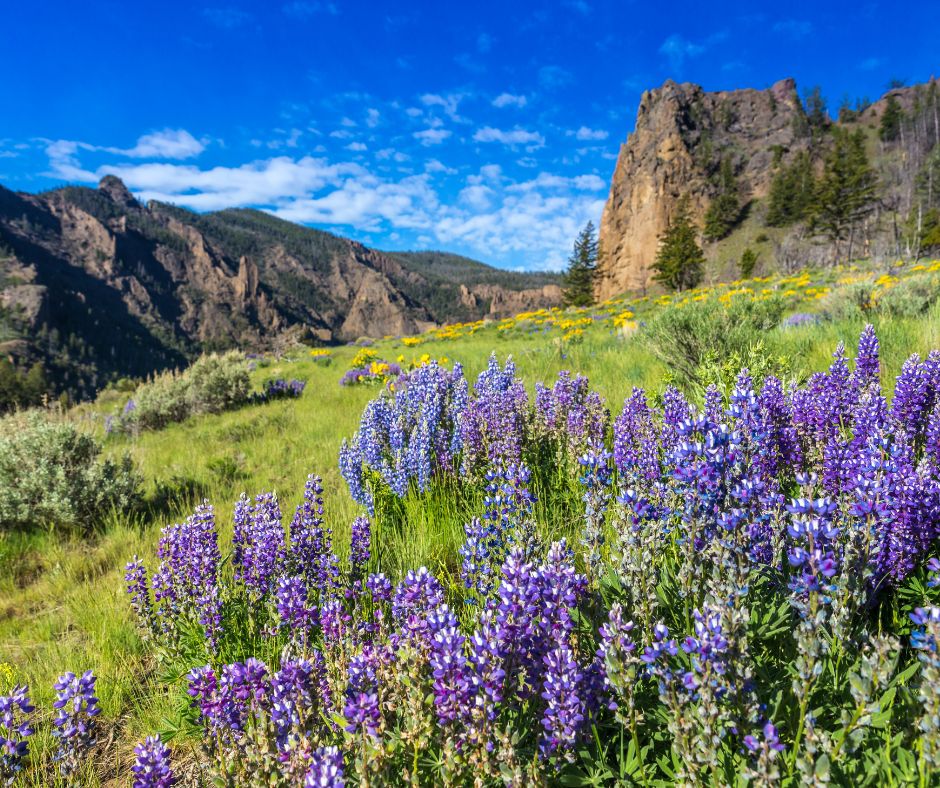
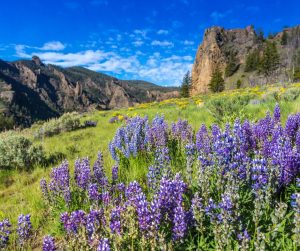
May–June. Wildflowers, newborn wildlife, fewer crowds. Some roads still closed. Cool temps.
Summer
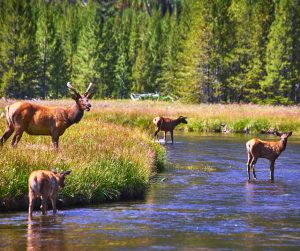
July–August. All roads open, all amenities available. Heaviest crowds. Reserve 13 months ahead.
Fall
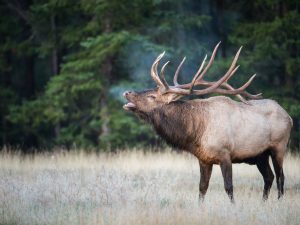
Sept–Oct. Elk rut, fewer crowds, gorgeous colors. Mild days, cold nights. Some late-Oct closures.
Winter
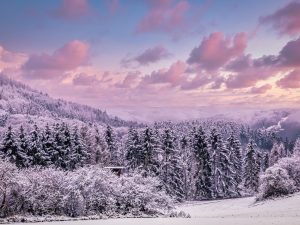
Nov–Apr. All RV campgrounds close. Stay in gateway towns and day-trip in by snowcoach.
If you have flexibility in your schedule, aim for late May through mid-June or September through early October. The park is dramatically less crowded, wildlife is highly active, and you’ll actually be able to park at major attractions without circling for 45 minutes. The fall elk rut is one of Yellowstone’s greatest spectacles — don’t miss it if you can help it.
How Many Days Do You Need for an RV Trip to Yellowstone?
The honest answer: more than most people plan for. Yellowstone covers 3,472 square miles across three states. Driving from Old Faithful to the Grand Canyon of the Yellowstone can take two hours when wildlife jams are active. Bison herds move on their own schedule, and you will stop to watch them.
For a first-time RV trip, plan for at least 5–6 days — including one built-in rest day when you stay close to camp and recharge. Many seasoned RVers have visited a dozen times and say they discover something new on every visit. A realistic daily plan:
- Day 1: Arrive, set up camp, explore the West Yellowstone area. Light afternoon drive through Madison Junction.
- Day 2: Upper loop — Grand Canyon of the Yellowstone, Norris Geyser Basin, Mammoth Hot Springs.
- Day 3: Lower loop — Old Faithful, Grand Prismatic Spring, Midway Geyser Basin.
- Day 4: Lamar Valley for wildlife viewing — best chance of spotting wolves, bears, and bison. Start at sunrise.
- Day 5: Rest day. From Mack’s Inn, explore Henry’s Fork fly fishing, Mesa Falls, or a float on the Snake River.
- Day 6 (optional): Grand Teton National Park is 109 miles south — a spectacular add-on day trip.
Why Staying Outside Yellowstone Is Often the Smarter RV Move
This runs counter to the instinct to camp as close to the action as possible — but experienced Yellowstone RVers often prefer basing themselves just outside the park. Here’s why:
Full hookups without the fight
Only Fishing Bridge inside the park has full hookups — and it’s extraordinarily competitive to reserve. Outside the park in gateway communities, full-hookup RV parks are plentiful, spacious, and far easier to book. You’ll have water, sewer, and 50-amp electric every night.
Bigger sites, more room to breathe
Many of Yellowstone’s in-park campgrounds were designed decades ago for smaller rigs. Private RV parks outside the park routinely offer longer pull-through sites, better leveling pads, and room for slide-outs without worry.
The drive in is part of the experience
Driving US-20 north from Island Park to Yellowstone’s West Entrance is a gorgeous 30-minute drive through the Targhee National Forest — a worthy prelude to the park itself.
Your base camp is a destination too
Island Park, Idaho offers world-renowned fly fishing on Henry’s Fork of the Snake River, ATV and snowmobile trails, Mesa Falls, Big Springs, and easy access to Grand Teton National Park. When you’re camped at Yellowstone RV Park at Mack’s Inn, there’s adventure even on your rest days.
Your Recommended Base Camp
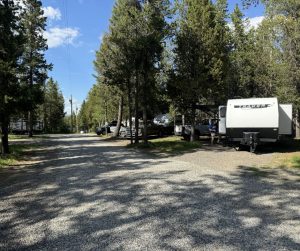
Yellowstone RV Park at Mack’s Inn — Island Park, Idaho
Just 24 miles from Yellowstone’s West Entrance (about a 30-minute drive), Yellowstone RV Park at Mack’s Inn offers everything in-park campgrounds can’t: full hookups at every site, large pull-through spots designed for big rigs, and the comfort of knowing your site is reserved without a 13-month fight.
The park sits on the banks of Henry’s Fork of the Snake River in the historic Mack’s Inn area — one of the most scenic stretches of the Island Park caldera region. Walk out your door and you’re steps from the river. Drive north and in 30 minutes you’re inside Yellowstone.
20/30/50 Amp Service
Large Pull-Through Sites
Free Wi-Fi Park-Wide
Pet-Friendly
Riverside Location
Assisted Site Parking
On-Site Laundry
Cabin Rentals Available
Propane Fill Next Door
Don’t have an RV? We also offer cozy cabin rentals — from the rustic Mountain Man Cabin for couples to the spacious Papa Bear Cabin for families, and the full Henry’s Fork Reunion Cabin sleeping up to 20.
Insider Tips for RVing Yellowstone Like a Pro
1. Tow a smaller vehicle into the park
Many experienced Yellowstone RVers tow a car and leave the big rig at camp each day. Parking large RVs at popular attractions like Old Faithful or Grand Prismatic Spring can be nearly impossible during peak hours. A smaller tow vehicle solves this completely.
2. Start every day before 8 a.m.
Yellowstone’s most popular sights fill up early. Wildlife is most active at dawn and dusk. Getting into the park by 7 or 7:30 a.m. means smaller crowds, better wildlife sightings, and available parking at major pullouts.
3. Bear-proof everything — especially in your RV
Bears have an extraordinary sense of smell. Never leave food, trash, cooking utensils, or empty coolers outside your rig unattended. Yellowstone’s campgrounds enforce these rules strictly, and for very good reason.
4. Know your dump station locations
If camping inside the park without hookups, locate dump stations before you need them. Stations are at Madison, Canyon Village, Bridge Bay, Fishing Bridge, and Grant Village. Staying at Mack’s Inn with full sewer hookups eliminates this concern entirely.
5. Don’t rely on in-park GPS or cell service
Cell service inside Yellowstone is limited and spotty. Download offline maps before you go and use GPS coordinates rather than address-based routing. Pick up a printed park map at the entrance station — your in-dash GPS may route you onto roads unsuitable for your rig.
6. Plan for bison jams
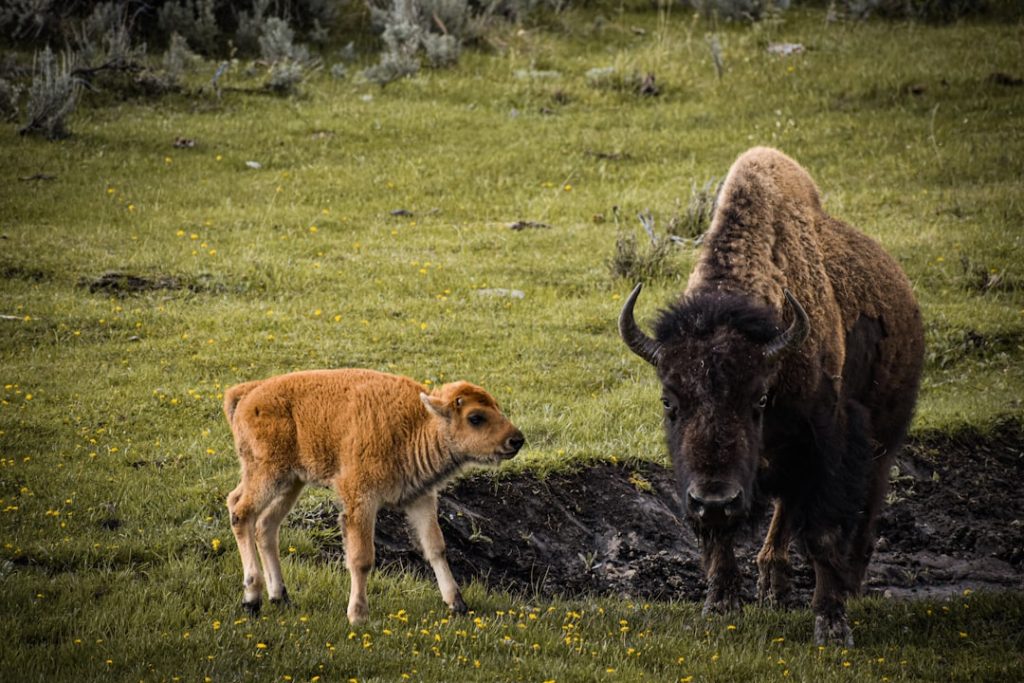
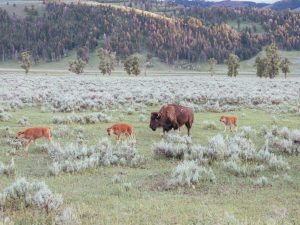
Bison have the right of way — always. A herd can block a road for 20 minutes or two hours. Build buffer time into every day’s plan. Sit back, turn off the engine, and watch North America’s largest land mammal at close range. It’s worth every minute.
7. Check road status every morning
Check the NPS Yellowstone conditions page each morning before heading out. Construction, weather closures, and seasonal restrictions affect which roads are open on any given day.
8. Respect wildlife distances
Park regulations require a minimum of 25 yards from most wildlife, and 100 yards from bears and wolves. Rangers issue citations. Staying a safe distance actually results in better wildlife photos — animals that feel unthreatened behave naturally.
More From Yellowstone RV Park at Mack’s Inn
- View Our Full Amenities — Everything included at your site
- Rates & Reservations — Book your site today
- Cabin Rentals — No RV? No problem. Cozy options for everyone
- Henry’s Fork Reunion Cabin — Perfect for groups and family reunions
- History of Island Park, Idaho — Learn about the volcanic caldera you’re camping in
- FAQs — All your questions answered before you arrive
- Directions to Mack’s Inn — Find us from I-15 or I-90
- Plan Your Trip — Day-by-day advice from our local team
Frequently Asked Questions About RVing Yellowstone
Is taking an RV to Yellowstone National Park a good idea?
Yes — an RV is genuinely one of the best ways to experience Yellowstone. The freedom to travel on your own schedule, cook your own meals, and sleep in your own bed after long days of exploration is hard to beat. The key is planning well in advance: knowing your rig’s dimensions, booking early, and choosing the right base camp. Staying just outside the park at a full-hookup RV park like Yellowstone RV Park at Mack’s Inn solves most of the logistics challenges.
What is the maximum RV size allowed in Yellowstone?
Most park roads accommodate RVs up to 40 feet long and 102 inches wide. The maximum combined vehicle length (RV plus tow vehicle) on all park roads is 75 feet. Some campgrounds have tighter restrictions — Lewis Lake caps rigs at 25 feet, and Indian Creek allows 30–35 feet. Always know your full combined length before making reservations.
Does Yellowstone have full hookup RV camping?
Inside the park, only Fishing Bridge RV Park offers full hookups — water, sewer, and electric at every site. All other in-park campgrounds are dry camping. For full hookups without the booking competition, Yellowstone RV Park at Mack’s Inn offers complete hookups at every site, just 24 miles from the West Entrance.
How far in advance should I book a Yellowstone campground?
For in-park campgrounds during summer, reservations open up to 13 months in advance and sell out within hours. If you’re planning a July or August trip without a reservation, you’re unlikely to find an in-park site. For campgrounds outside the park — like Yellowstone RV Park at Mack’s Inn — book as early as possible, but sites are generally much easier to secure.
Can you boondock inside Yellowstone National Park?
No. Camping or overnight parking outside of designated campgrounds is strictly prohibited throughout Yellowstone National Park. Violations can result in fines and removal from the park. All overnight stays must be in approved campgrounds.
Is Island Park, Idaho a good base for a Yellowstone RV trip?
Island Park is an excellent base. Yellowstone RV Park at Mack’s Inn sits just 24 miles from Yellowstone’s West Entrance — approximately 30 minutes on a flat, straightforward road through the Targhee National Forest. Island Park also offers world-class fly fishing on Henry’s Fork, Mesa Falls, ATV trails, and easy access to Grand Teton National Park to the south.
What is the best time of year to RV to Yellowstone?
Fall — especially September and early October — is widely considered the best time for RVers. Crowds drop significantly, the elk rut is spectacular, temperatures are pleasant, and campsite availability improves. Late May and early June are also excellent. Midsummer offers all open roads and amenities, but crowds and campsite competition are at their peak.
Final Verdict: Is Taking an RV to Yellowstone a Good Idea?
Unequivocally, yes. RVers who make the trip to Yellowstone consistently rank it among the best experiences of their traveling lives. The combination of geothermal wonders, abundant wildlife, dramatic landscapes, and the pure freedom of arriving and departing on your own schedule makes it a bucket-list trip worth every bit of planning it requires.
The visitors who have the best time are the ones who plan ahead, know their rig, choose a great base camp, and embrace the unhurried pace that Yellowstone demands. From a comfortable, full-hookup site at Yellowstone RV Park at Mack’s Inn, you can take the park at exactly the pace it deserves — and return each evening to the sound of the river and the pine-scented mountain air.
Ready to start planning? Check availability and rates at Yellowstone RV Park at Mack’s Inn, or call our friendly staff at (208) 716-5959. We’d love to help make your Yellowstone RV trip unforgettable.