
Should You Stay Inside or Outside Yellowstone? An Honest Guide for RV Travelers
If you’re taking an RV to Yellowstone, one question tends to hold up the whole plan: should you stay inside or outside Yellowstone? It’s a fair thing to get stuck on. Your answer changes what you pay, how far you drive every morning, and whether your rig gets real hookups or a gravel pad and a generator.
Here’s the honest version, both sides, with no sales pitch until the end. We run an RV park about 30 minutes from the West Entrance, so yes, we have a horse in this race. But the goal here is to help you make the right call for your trip, even if that call is to book a room inside the park.
Already sold on bringing the RV? We wrote a separate piece on whether taking an RV to Yellowstone is a good idea. This one is about where to park it once you’re there.
The short answer
If you can book a room or a full-hookup site inside the park, and the cost doesn’t change your decision, staying inside for a night or two is hard to beat. You wake up in the park. You’re standing at the geysers before the crowds show up.
For most RV travelers, though, staying just outside the park is the better call. You’ll pay less, you’re far less likely to get shut out, and your RV gets the hookups it actually needs. Stay near the West Entrance and the morning drive in is short enough that you’re not losing your best hours to the windshield.
So when someone asks us should I stay inside or outside Yellowstone, our answer is usually the same: outside, near a gate, with full hookups. Here’s how we get there.
Staying inside Yellowstone: the honest pros and cons
Sleeping inside the park has a real pull, and we’re not going to pretend otherwise.
What’s good about it:
- You’re already in the park at dawn and dusk. Those are the best hours for wildlife and the quietest hours at the geysers.
- Less driving to the interior sights. If you want to spend a few days deep in the park, a night inside cuts your time behind the wheel.
- The experience of it. Falling asleep with bison somewhere out in the dark is worth something.
What’s hard about it:
- Rooms and cabins book up a long way out. The in-park lodges open reservations many months ahead and fill fast for summer. If you’re planning on a shorter runway, inside is often already gone. The park’s own lodging page is the place to check what’s left.
- RV hookups inside are thin. Most park campgrounds are dry, meaning no water, sewer, or electric at your site. Fishing Bridge is the one RV park inside the park with full hookups, and it sits way over on the east side, hours from the West Entrance.
- It costs more. You’re paying for the location, and the amenities are often more rustic than what you’d get outside for less.
- Cell service is spotty and food options are limited. Changing plans on the fly is harder when you’re an hour from the nearest grocery store.
If your whole trip is one or two nights and you scored an in-park spot, take it. For a longer stay in an RV, the math usually points the other way.
Staying outside Yellowstone: the honest pros and cons
Staying outside means basing yourself in or near a gateway area and driving in each day.
What’s good about it:
- It costs less. Nightly rates outside the park are generally lower, and you tend to get more for the money.
- There’s actual availability. You can usually book closer to your trip, and a last-minute change of plans doesn’t sink you.
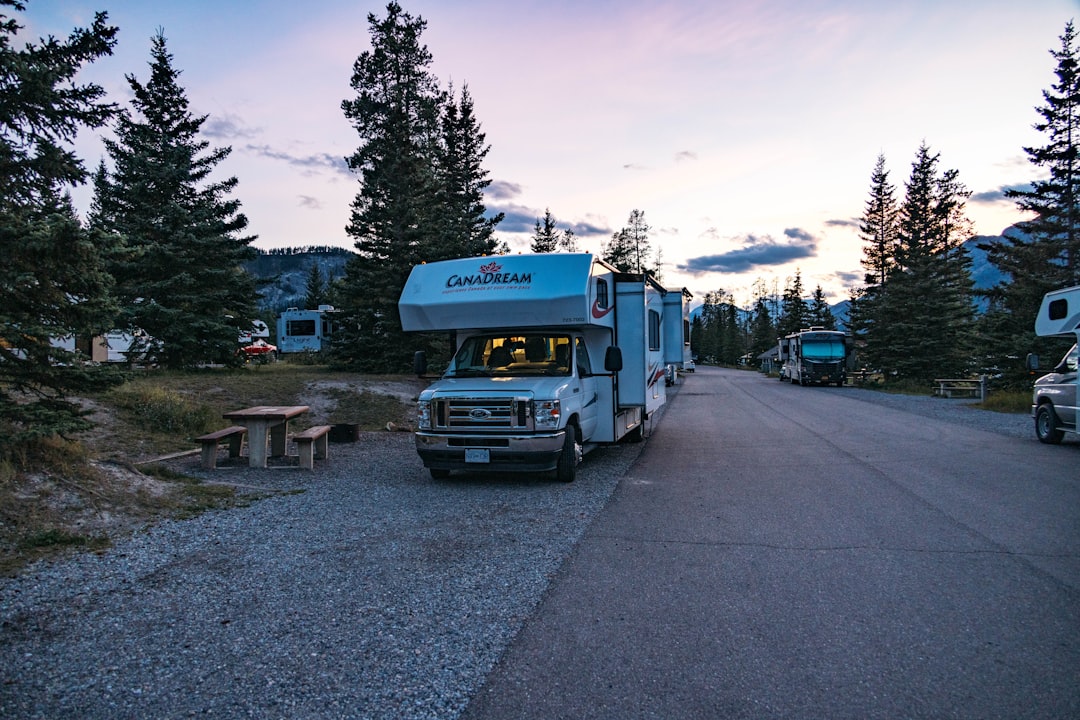
- Your RV gets real hookups. Full water, sewer, and 20/30/50-amp power means you run your AC, fill your tanks, and leave the generator off.
- The amenities are there when you get back. Showers, laundry, a store, strong Wi-Fi, restaurants and groceries close by. After a long day in the park, that adds up.
- Better cell service, so you can plan tomorrow from tonight.
The trade-off:
- You drive in each morning. In peak summer the entrance gates can back up, so an early start pays off.
- You’re not sleeping under the geyser steam. You give up a little immersion for a lot of comfort and flexibility.
For most families and groups in an RV, that’s an easy trade. The part people miss is how much “outside” varies. Two hours from a gate is a completely different trip than 30 minutes.
Why the West Entrance side is the sweet spot for RV travelers
Not all “outside” is created equal. Stay too far out and you burn your mornings driving. Stay near the right gate and you get most of the upside of both options.
The West Entrance is the busiest gate in Yellowstone, and for good reason. It puts you closest to the heavy hitters: the Madison River, the Firehole River and Lower Geyser Basin, Old Faithful, and the wildlife-rich meadows along the west side of the park. From the West Entrance you can be watching bison at sunrise without a two-hour drive in the dark to get there.
That’s the whole case for a basecamp near the West Entrance. You sleep outside the park with full hookups and real amenities, then you’re through the gate and into the good stuff in short order. Comfort of outside, most of the access of inside.
Our park sits about 24 miles from the West Entrance, roughly a 30-minute drive, up in Island Park, Idaho. Close enough for an early start. Far enough out that you’re staying in quiet pine country on the Henry’s Fork instead of a packed lot in the middle of town.
When should you go?
Where you stay and when you go are really the same decision, because the season decides what’s even open.
Summer, from around Memorial Day through mid-October, is peak. Every road and gate that’s going to open is open, the days are long, and the park is busy. If you want Old Faithful and the full loop, this is your window. Book your site early, because this is when things fill.
The shoulder seasons are the quiet money. Late May and early June, then again in late September and October, bring thinner crowds and easier bookings. Fall adds the elk rut and cooler air, and the wildlife is active. It’s our favorite time to send people.
Winter is a different animal. Most park roads close to regular vehicles from about November through April, and the West Entrance opens only to over-snow travel like snowcoaches and snowmobiles. If a winter trip is on your mind, check the park’s operating hours and seasons before you lock anything in.
For an RV trip, aim for late spring through early fall. Then make the inside-or-outside call based on everything above.
Make it your basecamp: what you get at Mack’s Inn
Here’s the pitch, now that you’ve seen both sides straight.
Yellowstone RV Park at Mack’s Inn is built for exactly this trip. We’re about 30 minutes from the West Entrance, with full-hookup sites and room for big rigs. Pull-through sites, 20/30/50-amp power, water, and sewer, so you’re not rationing power or hunting down a dump station on your vacation.
You also get:
- Cabins and a 20-person reunion house, for the part of your group that isn’t in an RV, or for pulling the whole family under one roof.
- On-site store, laundry, showers, and park-wide Wi-Fi. The basics, done right, after a long day out.
- The Henry’s Fork of the Snake River within walking distance. Fly fishing on foot, straight from the park.
- UTV, canoe, and kayak rentals nearby, plus a propane fill right next door. The things that make an RV trip easier are close at hand.
Plenty of RV travelers use us as their Yellowstone basecamp for these reasons. We laid out the full case in Where to Stay Near Yellowstone: Why RV Travelers Love Staying at Mack’s Inn if you want the details.
The bottom line
So, should you stay inside or outside Yellowstone? If you can get an in-park spot for a night or two and price isn’t the deciding factor, enjoy it. For most RV travelers, staying just outside near the West Entrance wins on cost, availability, and hookups, without giving up much access to the park.
If that’s the trip you’re planning, book early. Summer sites go fast.
Reserve your site at Yellowstone RV Park at Mack’s Inn — full hookups, big-rig friendly, about 30 minutes from the West Entrance. Skip the sold-out lodges and the long haul in, and wake up on the Henry’s Fork ready to hit the park at first light.